The Cambridge Greek Play 2026: Ion
I often lament the lack of hills, never mind mountains, living in Cambridge. But to focus instead on what makes it unique, it’s not many places you can see a performance of the ancient plays in their original language.
A triennial event dating back to 18821, this year’s Cambridge Greek play sees a performance of Euripides’ Ion , a tale of reunion between a mother and her demigod son after being abandoned at birth.
Having had a fairly awful Friday morning at work, what better way to cheer myself up than head to the Cambridge Arts Theatre to watch some tragedy. Facetiousness aside, the performance was fantastic, and a welcome end to a long week.
The entire cast did an excellent job of delivering an emotive performance, complete with a smattering of humour, in a language not spoken in centuries. And if you are doubting your own fluency don’t worry; the English translation is presented on a screen at the side of the stage as the performance progresses. It’s essentially ancient anime.
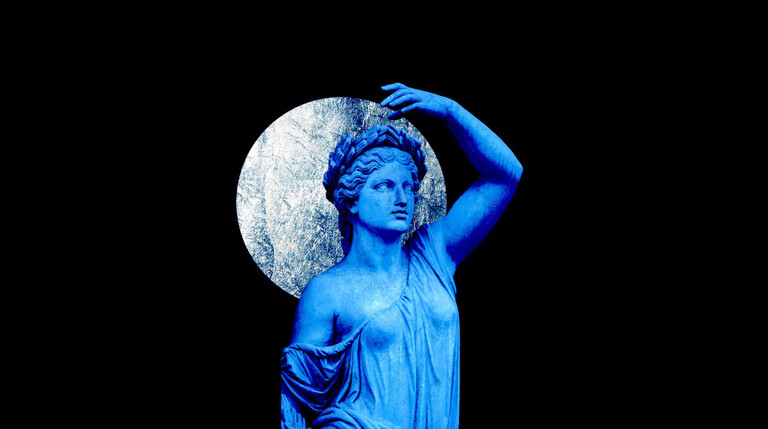
Promotional image from the production
The play is interesting for its relatively critical stance on the meddling of a god (Apollo) in human affairs. Whilst I won’t delve into the full plot here, I would pick out that the ending attempts to soften this critiscism with a deus ex machina so sudden and ridiculous that it does not annoy, instead coming over as a rather amusing tongue in cheek event.
I bring this up as one of my main praises, and perhaps tribute to the directorship and production, is that they do not let the play end on the high note that the script might suggest, but instead to deliver the tragedy I crave with Creusa exiting stage left weeping. Whilst she has been reunited with her son, she is forced to keep his conception a secret to allow her husband Xuthus his happily ever after. She has no closure, and is faced with continuing to hide what has been torturing her throughout her life. This exit, to melancholic choral accompaniment, highlights this being her story, and affirming the play as a tragedy to the modern audience.
Amongst an excellent cast Dylan Hughes’ shone as an extremely expressive Ion and I was impressed by a spectacularly synchronised Athenian chorus. It was a nice touch was to have an original accompanying score by Cambridge professor of composition Richard Causton with standout performance by Konstantinos Glynos on the q’anun. The instrumental combination of q’anun and Accordion came across as particularly eerie in the opening.
If I were to dig for critiscism I’d pick out the ‘confetti’ that was continuously falling during the early scenes to build up on the stage. I feel this was supposed to be a metaphor for something, being swept and thrown by the chorus in their moments of anguish, but the meaning eluded me. Perhaps this is just myself found lacking in interpretation. Whilst the ending was a highlight, I felt the choral exode went a little too long, eventually finding myself waiting for it to be over. It was also an interesting choice, for a performance that made such great efforts in translation and understanding, to forego Hermes’ opening prologue. Instead we are treated to an interpretive exposition, with percussive accompaniment, representing Creusa’s abuse by Apollo. Whilst artistic for those who already know the plot and setting, it fails to communicate vital dramatic irony for following the story to its climax.2
Overall this was a wonderful performance, very well put together on all aspects from cast, to costumes and score. I thoroughly enjoyed it, even as one often tentative to theatre, and my only real complaint is that it’ll be three years until the next one.
The contents of this post can be shared, with attribution, under the terms of CC BY-NC-SA 4.0 .